Tsessebe
Quick Facts
Overview
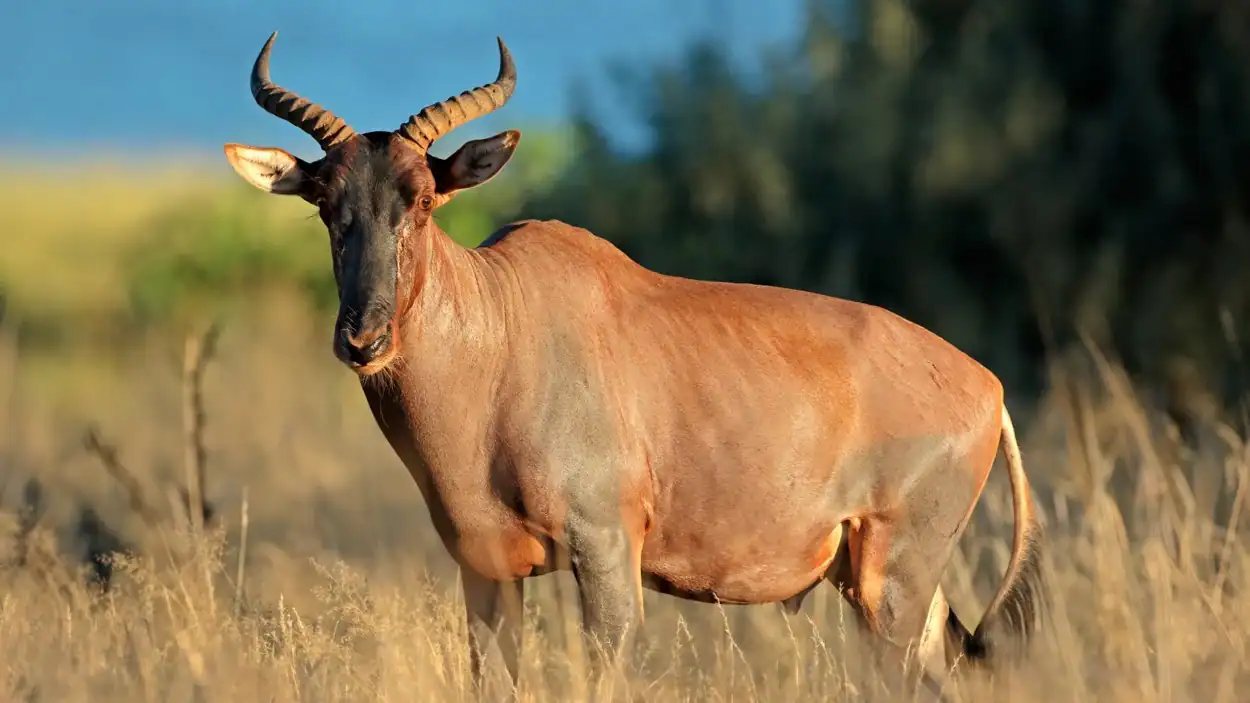
Hunting a tsessebe offers a unique experience because this species is built for speed, alertness, and long-distance movement. They’re one of the fastest antelope in Africa, and their sharp vision combined with their tendency to occupy open grassland means a hunter’s approach must be deliberate and patient. Many hunters pursue tsessebe specifically for their striking appearance — the dark chocolate colouring, elongated face, and distinctive horns give them a look unlike any other plains-game species.
Tsessebe typically gather in small herds, often dominated by a territorial bull that keeps a close eye on the group. This structure adds both opportunity and challenge: it’s usually clear which bull is mature, but getting close enough without the herd spotting movement requires good fieldcraft. They rely heavily on scanning their surroundings, often standing tall on termite mounds or slight rises, which forces hunters to use terrain creatively.
A tsessebe hunt is memorable for the pace and precision it demands. Spotting them at a distance, reading their movement patterns across open plains, and timing a stalk to intersect a bull before the herd shifts position can create a real sense of accomplishment. Their speed means they rarely give a second chance once alarmed — making a clean, well-planned first shot part of the thrill. For hunters who enjoy fast, open-country stalking, tsessebe offer an experience that feels athletic, tactical, and deeply rewarding.
Located in South Africa
Tsessebe populations are strongest in regions with wide, open grasslands, and South Africa’s managed conservation areas have helped them remain stable across several provinces. They are most commonly hunted in Limpopo, North West, the Free State, and parts of the Northern Cape, where large tracts of savanna and gently rolling plains suit their grazing habits. These areas give tsessebe the visibility they prefer, allowing them to detect predators and move freely in loose herds.
They favour short-grass plains, lightly wooded savannas, and open transitional areas where they can graze while maintaining clear views of their surroundings. Many hunting reserves support tsessebe through dedicated herd management, ensuring strong genetic lines and healthy breeding groups. This has helped preserve the species in areas where natural populations were once fragmented, providing consistent hunting opportunities with good trophy quality.
Best Months to Hunt
Tsessebe can be hunted throughout the year, but the most effective time is May to September, when grass levels drop and visibility improves dramatically. During the dry season, tsessebe spend more time moving between feeding and water areas, which helps hunters locate herds earlier in the day. Their preference for open terrain means even a slight reduction in grass height makes herd assessment and bull identification much easier.
Cooler temperatures also create more active morning and afternoon periods, making it possible to plan longer, more controlled stalks across open country. Because tsessebe are alert and quick to react, the dry months give hunters clearer sightlines and fewer obstructions for steady shot placement. While they remain possible year-round, winter conditions provide the best mix of comfort, visibility, and predictable herd movement for a confident, well-executed hunt.
Explore Hunting Farms
Browse farms in South Africa where buffalo are available. Check the listings for locations, accommodations, and hunting methods, and contact the outfitter for current availability.