Hippo
Quick Facts
Overview
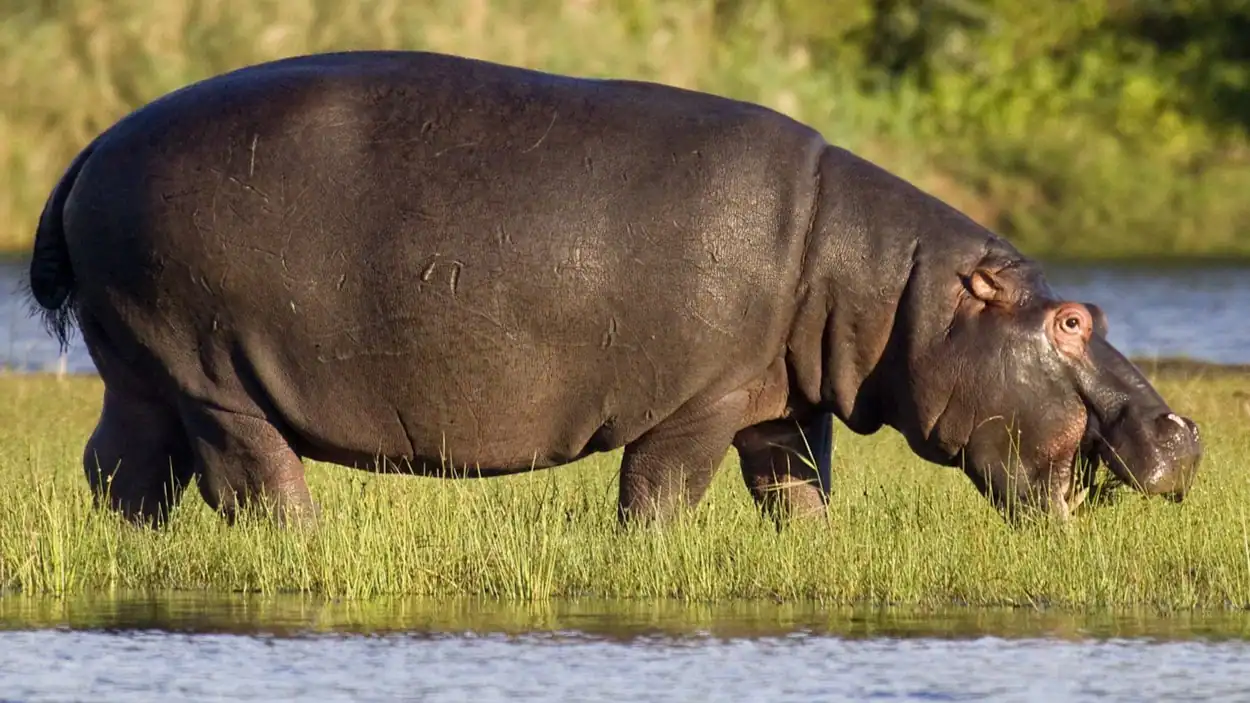
Hunting a hippopotamus is one of Africa’s most unique and adrenaline-filled challenges. Despite their bulky, almost docile appearance, hippos are among the most dangerous animals on the continent — extremely territorial and unpredictable, especially when startled or provoked. Hunters often pursue them along riverbanks or from boats, requiring steady nerves, precision, and careful judgment of shot placement.
A successful hippo hunt demands patience and respect for the animal’s aquatic habits. Most time is spent observing herds during the day as they wallow or sleep in the water, waiting for the right bull to surface. The vital area is small and often obscured, adding to the challenge. Whether taken on land during grazing or from a vantage point along the water’s edge, a hippo hunt delivers an unmatched blend of tension, respect, and raw African wilderness.
For many hunters, taking a hippo represents not only a rare trophy but also an authentic experience that connects them to Africa’s great river systems and the traditional skill of dangerous-game hunting.
Located in South Africa
Hippos are found in several regions across South Africa where permanent rivers, lakes, or dams provide suitable aquatic habitat. They are most concentrated in Limpopo and Mpumalanga, particularly within and around the Kruger National Park and adjoining private reserves. KwaZulu-Natal also supports strong populations along its coastal rivers and wetlands, while select game reserves in the Eastern Cape have introduced or manage smaller herds for sustainable hunting.
These areas provide the deep pools and reed-fringed banks hippos prefer, with surrounding grasslands that offer ample night grazing. Most hunting operations manage populations carefully under strict permits to ensure both conservation and ethical pursuit, maintaining the balance between riverine ecosystems and responsible game management.
Best Months to Hunt
Hippopotamus can generally be hunted year-round in South Africa, though the dry winter months (May to September) are preferred. During this period, lower water levels expose more of the riverbanks and make locating animals easier. Visibility improves, and hunters can better position themselves for safe, accurate shots as hippos spend more time in shallower pools.
Cooler weather also means more comfortable conditions for stalking and waiting along the water’s edge. Early morning and late afternoon offer the best opportunities, as hippos transition between grazing grounds and their aquatic resting areas — providing that unforgettable moment when Africa’s river giants rise from the water.
Hippopotamus can generally be hunted year-round in South Africa, though the dry winter months (May to September) are preferred. During this period, lower water levels expose more of the riverbanks and make locating animals easier. Visibility improves, and hunters can better position themselves for safe, accurate shots as hippos spend more time in shallower pools.
Cooler weather also means more comfortable conditions for stalking and waiting along the water’s edge. Early morning and late afternoon offer the best opportunities, as hippos transition between grazing grounds and their aquatic resting areas — providing that unforgettable moment when Africa’s river giants rise from the water.
Explore Hunting Farms
Browse farms in South Africa where buffalo are available. Check the listings for locations, accommodations, and hunting methods, and contact the outfitter for current availability.