Bontebok
Quick Facts
Overview
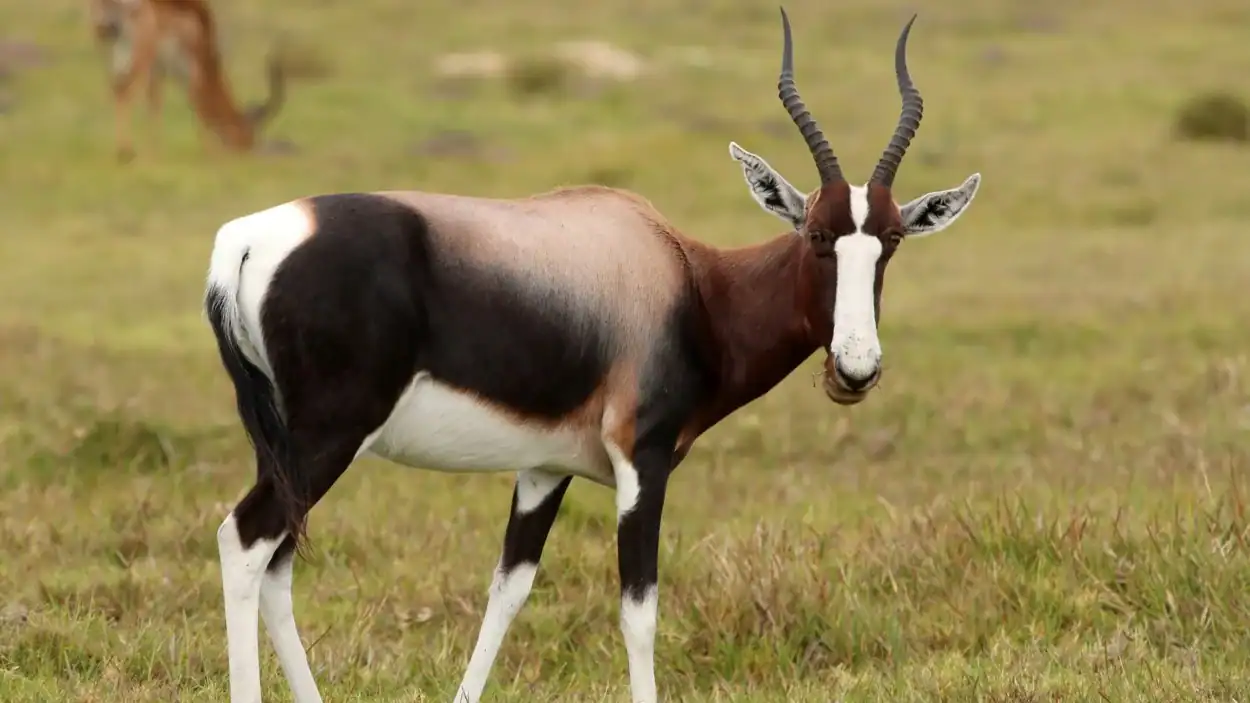
Hunting a bontebok is a special experience, not because of difficulty alone, but because of the species’ unique conservation story and striking appearance. Their sharply defined white blaze, deep chocolate-brown coat, and contrasting rump patch make them instantly recognizable through binoculars — and incredibly rewarding to spot in the field. Most bontebok are found on well-managed properties, and although they prefer open grasslands, they are alert, quick to group together, and sensitive to movement, which requires steady stalking and careful positioning.
Rams carry smooth, lyre-shaped horns that rise cleanly before sweeping outward, making horn evaluation an enjoyable part of the hunt. Because bontebok typically move in small herds, hunters often need to pick out a single mature ram while the group shifts, turns, and repeatedly screens each other — adding a calm, measured challenge to the moment. A successful stalk often involves using low vegetation or gentle contours in the terrain to get within a comfortable shooting distance without being silhouetted.
Many hunters describe bontebok hunts as memorable for their peaceful, open landscapes and for the privilege of pursuing a species that was once nearly extinct. It’s a hunt that combines good fieldcraft, patience, and respect for a well-managed African antelope.
Located in South Africa
Bontebok are native to the Western Cape’s fynbos and coastal renosterveld plains, where they originally occurred in a very limited range. Today, thanks to careful conservation and breeding programs, they are found across various parts of the Western and Eastern Cape, as well as on select private reserves in other provinces. Their preferred habitat includes open grasslands, low shrublands, and gently rolling plains where visibility is high, but cover can still be used strategically during a stalk.
Most bontebok populations are carefully managed to ensure genetic purity, meaning many hunting properties maintain dedicated herds under strict conservation guidelines. Hunters will typically encounter them in spacious, open terrain where their distinctive colouring stands out beautifully against the landscape, making them both easy to spot yet challenging to approach without being seen.
Best Months to Hunt
Bontebok can be hunted throughout most of the year, but the best months typically fall between April and September. During these cooler, drier months, grass is shorter, visibility improves, and herds spend more time feeding in the open — ideal conditions for planning a clean stalk. The winter coat also appears slightly richer in colour, which helps with trophy assessment at distance.
Early mornings and late afternoons offer the most activity, as herds move steadily between feeding and resting areas. Because bontebok prefer open spaces, hunters benefit from stable wind, patient movement, and using natural dips in the terrain to close the distance. Overall, winter conditions provide the most consistent and hunter-friendly experience.
Explore Hunting Farms
Browse farms in South Africa where buffalo are available. Check the listings for locations, accommodations, and hunting methods, and contact the outfitter for current availability.